Showing posts with label Jeremiah. Show all posts

Monday, November 23, 2009

Hope for a Ghost Town

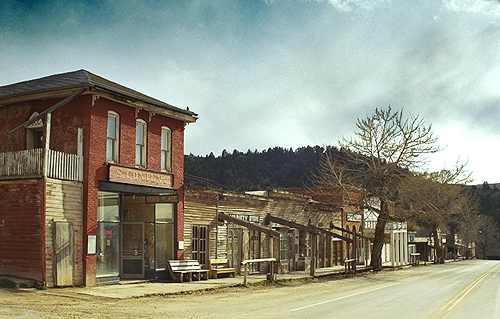
"How lonely sits the city that was full of people. She has become like a widow who was once great among the nations." This is how the first verse of Lamentations describes Jerusalem after the destruction resulting from Babylonian exile. The city that had once been the center of a great kingdom, a city that had been full of people, commerce, and life, a city that was the envy of neighboring nations was now desolate and lonely. I imagine that Jerusalem must have been something like the ghost towns that speckle the western portion of our own nation. They were towns that sprang up rapidly, often due to natural resources such as oil, gold, or silver that were found in the area. However, once those resources dried up the towns that had sprang up around them often did as well.

According to Jeremiah, Jerusalem's problem was not a drying up of natural resources but it's failure to tap into its spiritual resources. Judah had turned its back on the God who had delivered them despite the fact that He had been their most faithful resource. As a result, God used Babylon to destroy Judah and its capital city, Jerusalem. Much of the city was razed to the ground and many of the inhabitants had been taken into exile . Jerusalem had become a ghost town with little hope of recovery or chance for a future.

Into this desolate situation, God speaks the words of Jeremiah 33:14-16 through the prophet to this lonely, helpless city. God promises that Israel and Judah's days are not over. Jerusalem will not be a ghost town forever. God will raise up a king from the line of David who will reign with righteousness and justice. This king will restore Jerusalem's fortunes so that it dwells in safety and prosperity once again. In fact, God says that this king will bring such great restoration to Jerusalem that the city itself will be called the "the Lord is our righteousness"; that is, the city itself will become a symbol of God's great care and covenant faithfulness to Israel.

As we enter the season of Advent, we remember that we await the restoration of our world as well. All of creation exists as a sort of ghost town, left desolate by the sin, violence, and pain that has rendered our world less than the rightly ordered, peaceful, abundantly life-filled world that it was created to be. We too wait for the arrival of our king who will restore our world so that all of creation becomes a testament to the Lord who is our righteousness.


Monday, March 23, 2009

A New Covenant for Our Sin Sickness

"Behold, days are coming", declares the Lord, "when I will make a new covenant with the house of Israel and with the house of Judah"... "I will put my law within them and on their heart I will write it and I will be their God and they shall be my people."

Jeremiah writes these words as the people of Israel continue to live in exile in a foreign land. The rest of Jeremiah 31 is focused primarily on the promise of Israel's return from that exile. Jeremiah speaks of the day when Israel will no longer live in a foreign land but will return home and see their nation restored. Jeremiah dreams of Jerusalem being rebuilt and the people living under God's rule once again. The people long for their punishment to come to an end; they long to return home.

But in the few verses that make up the sermon text for this week God speaks through Jeremiah to a larger problem that needs to be remedied. Yes, the exile is one very serious problem that needs to addressed. But it is mostly just a symptom of the real problem; Israel's unending cycle of sin and idolatry. It is that sin that landed them in this mess in the first place. Furthermore, the exile was not the result of one sin or even one generation's sins. It was the result of the piling up of the sins of generation after generation. Much of the Old Testament could be seen as a record of the inability of Israel to avoid sin. Therefore, Israel needs more than just deliverance from their exile. They are also in desperate need of deliverance from their slavery to sin.

This is what the new covenant promises. God says through Jeremiah that one day he will take the Law that had been written on stone tablets and write it on the hearts of the people. The people will no longer have to teach each other about God because they will all know God. This is a promise that God will grace his people in such a way that the power of sin over them will actually be broken and the cycle of sin can come to an end. It is a promise that God will take steps not only to treat our symptoms but to heal us of our illness.

Wednesday, June 25, 2008

CAMA Pulpit Exchange

I won't be preaching from Romans this week since it is the week of the Clinton Area Minister's Association (CAMA) Pulpit Exchange. All of the ministers in the area that participate in CAMA will be preaching at a church other than their own this Sunday. I will be preaching at the Christian Church. Rev. Hunte, the pastor at the Presbyterian Church will be preaching here at our church.

I decided to use a sermon I have preached before since I am preaching somewhere else this Sunday. This not only frees up some time for me to work on some other important projects that needs to get done. It also gives me a chance to preach one of my favorite sermons again. I'll be preaching from Jeremiah 23:1-6 while also referencing Luke 23:33-43. In the Old Testament passage, Jeremiah speaks of a king who will restore justice and righteousness in the land. I use the imagery of an old western and a new sheriff coming to town to straighten things out to communicate this idea of a righteous king who restores justice in Judah.

Of course, as Christians we believe that this Messianic prophecy should be applied to Jesus but the crucifixion scene in Luke 23 shows just how oddly Jesus fits this description. The words of the scoffers at Jesus' crucifixion highlight this reality. They all point out that if Jesus was really the Messiah he claimed to be then he would be able to save himself from the cross he is on. But, of course, Jesus does not. He does not restore justice and righteousness by force. He does it through his own willing death and his trust in God to resurrect him. This resurrection is God's proclamation to the world that Jesus is indeed the new sheriff in town just as he claimed to be even though he does not look quite like the sheriff anyone expected.