Showing posts with label Advent. Show all posts

Monday, December 2, 2013

Waiting

You can get so confused
that you'll start in to race
down long wiggled roads at a break-necking pace
and grind on for miles cross weirdish wild space,
headed, I fear, toward a most useless place.
The Waiting Place...

...for people just waiting.
Waiting for a train to go
or a bus to come, or a plane to go
or the mail to come, or the rain to go
or the phone to ring, or the snow to snow
or the waiting around for a Yes or No
or waiting for their hair to grow.
Everyone is just waiting.

Waiting for the fish to bite
or waiting for the wind to fly a kite
or waiting around for Friday night
or waiting, perhaps, for their Uncle Jake
or a pot to boil, or a Better Break
or a string of pearls, or a pair of pants
or a wig with curls, or Another Chance.
Everyone is just waiting.

NO!
That's not for you!

                                                                        - Oh, the Places You’ll Go
                                                                        Dr. Suess


Oh, the Places You’ll Go is probably my favorite of all the books I read with my children. I love it because it is exciting to think about all the places my children will go in their lives; the decisions they’ll make, the things they’ll do, the ways that their lives will become uniquely their own apart from me. I also like that the book points out that things don’t always go so smoothly. While it celebrates all the great things we can do with our lives, it also acknowledges that there are always set backs and difficulties along the way. “Bangups and hangups can happen to you” it says.

But there is a particular part of the book that has been prominent in my mind over this last year of our lives: the lines that I’ve quoted above. Our family has found itself in this “waiting place” for much of this past year. It started last October as we waited for Esther to be born 11 days past her due date. In November, I submitted my applications to doctoral programs and began waiting for an answer. Hints of an answer would come in February as I was accepted to one school and on the waiting list at another but the final answer would not come until April. I wish I could say that I was calm and collected during this nearly half a year, trusting that God would provide no matter the circumstance but that simply wasn’t the case. I was wracked with anxiety like few other times in my life, not only wondering whether I would get in anywhere but wondering where we might be moving our family if we moved at all.

But that waiting already seems a distant memory because of what has happened since. It is difficult to even remember just how stressful that time was because the months that followed were a whole new level of stress and anxiety. On May 26, my dad suffered a stroke. The next three weeks were filled with waiting and wondering; waiting to see how long it would take my dad to recover, how much he might recover, or if he would recover at all. One day would bring reports of improvement, the next day reports of concern. Every day there was nothing to do but wait; wait to see if the swelling in his brain would go down, wait to see if his cognition improved, wait to see if he could swallow food. On June 14, the waiting ended as my dad entered his eternal rest.

The day after my dad’s funeral, my mom called to tell me that my grandmother, my only living grandparent and the only one I had known into my adult life, had been taken to the hospital. So now we would wait for the results of her tests. A week later we found out that she had stage 4 cancer in several organs and that she had a couple weeks to a couple of months to live. So we waited. We let her know that we loved her in all the ways we could and we waited for the inevitable. On August 4, my grandmother’s waiting ended.

In the time between my dad’s and grandmother’s deaths, we relocated our family from Illinois to Massachusetts so that I could begin my ThD program at BU. This brought its own forms of waiting; waiting to settle into a routine after uprooting our children from the only home they have ever known, waiting to get over the continuous string of illnesses that has come from being in a new place, waiting for the grief from too many losses too close together to become anything other than numbness and exhaustion.

And the waiting continues even now over a year since it all began. We are still waiting on our house in Illinois to sell. We are still waiting to get into our own home here. We are waiting to see if Jess will eventually have a full time teaching job. We are waiting for some order to emerge from the chaos.

All of this waiting has made me keenly aware of just how little waiting I’ve done in my life. We live in a culture that does its best to eliminate waiting from our lives.  The fast food drive thru, every searchable fact available at lightning speed in the palm of our hand, and stores open on Thanksgiving Day already decorated for Christmas have conditioned us to expect that anything worth having ought to be available simultaneous with the moment our desire arises. Generally speaking, we are not a people accustomed to waiting. Given the opportunity, we will eliminate all the waiting we possibly can from our lives because, as Dr. Seuss says, the waiting place is “a most useless place.” Time spent waiting, we often think, is time wasted. Time we could have spent doing something more enjoyable or more important.

I think we often carry this same view over into our thoughts about God and God’s work in our lives. God has a plan for each one of us, we proclaim, and our task is to get in line with that plan as quickly and smoothly as possible. We have an “Oh, the Places You’ll Go with God” theology. God wants to do great and exciting things in your life. And sure, there will be set backs along the way. That happens to all of us. But don’t get stuck too long because time spent waiting is time wasted; time you could have spent getting on with God’s plan for your life.

It is no wonder then that we have great difficulty with Advent; a season defined by waiting. For four weeks leading up to Christmas, the Church says “Wait”. Right at the time when our culture is working itself into its annual holiday frenzy of shopping, scheduling, and socializing, the Church asks us to remember what it means to wait. We remember Israel’s centuries long waiting for its Messiah. We remember that we are waiting for the world to be set right. For one month every year, our task is not to do or accomplish or follow a plan but only to wait.

In fact, the Church’s year begins here. Advent is the first season of the Christian calendar. Waiting is not one stance among others for us. It is our first stance. It is where our worship begins. Before Christ is born at Christmas, before his kingdom is proclaimed in Epiphany, before the journey to the cross in Lent, before the new life of Easter and the gift of the Spirit at Pentecost, before all of it, the very first movement of the Church’s life every year is to take up a posture of waiting. It may well be that centuries of Christian wisdom found that this posture was the one in which we could most readily come to know the savior celebrated in all the other seasons. The Church calendar, patterned as it is after the life of Christ, easily could have started with Jesus’ birth at Christmas. Instead, we confess that in order for the story of Christ to be properly told and lived it must begin with a season of waiting. Rather than counting time spent waiting as time wasted, the Church confesses that time spent waiting is essential to truly seeing and knowing Jesus.

This is what I wish to confess as well. This year of waiting for various things has caused me to see Jesus more clearly. And that clearer vision is of a Jesus who waits with us; whose priority isn’t as much plans and proper decisions, as it is presence.

I’ve been reminded in all these times of waiting that we wait for those we love. The times when we have a choice in the matter, we choose to wait for those about whom we care. We wait in a hospital room with those who are dying because simply being with them is more important than anything else we could be doing. We wait to start a meal until everyone is present because eating with those we love is as important as eating. We wait for marriage because the health of our relationship with this one person is more important than gratifying our sexual desires. When we wait for someone, we are saying that their presence is more important than whatever else we might be doing at that moment or whatever else we might get from them. In relationships of love, presence takes precedence over plans.

I imagine that it is not so different in our relationship with God. Karl Barth wrote that “The will of God is Jesus Christ.” I’m not certain about everything that Barth meant by that sentence but it at least might suggest that God’s will for our lives isn’t so much a plan as a person. What God wills more than anything else is not that we accomplish certain things or go certain places in life or make exactly the right decisions. God’s will for us is Jesus; that in Jesus we will know the presence of God in our very own flesh.

I think of all the people I know who are waiting or have waited for something for so long. Friends who have waited to have children. Who are waiting for a job. Waiting for an opportunity. Who are waiting for healing. Who are waiting for an inevitable death. Who are waiting for that special someone. Some who are waiting for purpose or direction. Some who are waiting for justice. Some who are waiting for some wholeness and peace. Just waiting for some order to emerge from the chaos. It seems like everyone close to me is waiting for something.

I’d be the last person to say that all our waiting will work out just fine in the end. It doesn’t always. I won’t say that the waiting isn’t painful, sometimes agonizing. We may very well plead with God to bring our waiting to an end. Jess and I have done just that many times over. Given the chance, we would have happily traded in all of our waiting many months ago before the worst of it had even began. But I will say that all our waiting and pleading is not in vain. It is not time wasted, whatever the outcome, if in our waiting we aim to encounter Jesus. For, as Pope Francis recently said, “The Lord does not disappoint those who take this risk; whenever we take a step towards Jesus, we come to realize that he is already there, waiting for us with open arms." 


May your season of waiting, whether it be these four weeks of Advent or a much longer time than that, be one in which you encounter a savior who is with us in all our waiting and who waits for you with open arms. 

Monday, December 17, 2012

With Us To Emmaus

Two disciples are journeying from Jerusalem to the town of Emmaus. On the way, they discuss the terrible things that have happened in recent days. They have seen the one they thought was Israel's messiah handed over to the Romans; beaten, and crucified by the very powers they thought he would defeat. They have seen their hopes and dreams for God's redemptive work in the world nailed to a cross and buried in the ground.

One who appears to them as a stranger begins to journey with them and asks what they are discussing. They are surprised by this question for everyone knows what happened in Jerusalem. They speak of Jesus' death as one of those incidents where people are saying "Did you hear about..." and they don't have to finish the sentence because there is only one tragic event about which everyone is talking and of which they are trying to make sense. Nevertheless, the two disciples inform their fellow traveler about Jesus of Nazareth, a prophet mighty in word and deed. You can hear their pain and disappointment bleeding through the pages of Luke's gospel. "But we had hoped that he was the one to redeem Israel."

"We had hoped..."

Had. Past Tense. No longer. There is no hope now. Jesus is dead. For all his power, he was unable to prevent this tragedy of all tragedies. When his followers needed a miracle most, Jesus failed to come through.

This stranger who journeys with them has a different perspective. They thought the Messiah was one who would prevent these terrible things from happening. He points them to Scripture they had never considered to be speaking about the Messiah. He argues that rather than being a conquering warrior the Messiah was always meant to be a servant who would suffer with those who are hurting; one who would win his victory by weakness rather than strength.

As the three travelers near the village, the two disciples urge their new traveling companion to stay with them. He agrees and they sit down at table together. There, he blesses the bread, breaks it, and gives it to them. It is only then, in this act of hospitality, this table fellowship, and the breaking of the bread, that they realize it has been Jesus himself who has been journeying with them all along.

This is not the text from which I had planned to preach this Sunday. It is one more often associated with Easter than the Sunday before Christmas. Nevertheless, I find it to be an appropriate word for the final Sunday of Advent. For in this season we remember that Christ has come but that his kingdom is not yet. In Advent, we are reminded that Jesus was the long-awaited prophet, mighty in word and deed. But we are also reminded that we are still waiting. That our hope has not yet been fulfilled. That our world is far from being filled with the peace and justice of God's reign.

Most of the Christian life is walked on that road from Jerusalem to Emmaus. We've placed our trust in Jesus. We've pinned our hopes for God's redemptive purposes in the world on Jesus. We've confessed that he was the one who could deliver our world. But then a 20 year old man walks into a school and takes the lives of 20 children and 6 adults after killing his own mother. And our confession threatens to become past tense. We had hoped that he was the one but what can stand up against this kind of evil? This kind of brokenness? We thought Jesus was supposed to put a stop to precisely this kind of madness. If in all of God's power and might, he failed to act in this most critical of times, this time when his intervention was needed most, this time when 6 and 7 years old were crying out to him for help, then perhaps he does not deserve our hope, our trust, or our faith. Perhaps we are best served by giving up on the idea that this world can ever change.

There are no answers in these times. There are no explanations that can make things better. Explanations don't bring children back from the dead.

But I do believe that in the midst of our darkest tragedies, Jesus walks that road from Jerusalem to Emmaus with us. I believe that when it seems that God is dead and powerless, he is actually walking right beside us. In all likelihood, we will not be able to see that it is Jesus who walks with us. The pain and tragedy are real; blindingly real. But Jesus isn't put off by our inability to see him. He keeps walking with us. He lovingly listens as we tell him about the tragedy, about why we've lost all hope and faith in him. And he keeps walking with us. He tries to show us that God is one who suffers with those who suffer. And he keeps walking with us.

And because he keeps walking with us, I do not believe that our blindness to his presence will last forever. If, in the time of our deepest tragedy, the time when we question our hope for God's redemption of our world, we can manage to show hospitality to a stranger...  If we can continue to enjoy table fellowship together... If, despite all the reasons to give up hope, we can continue to break bread together then our eyes will eventually be opened and we will realize that Jesus is far from dead. He has, in fact, been traveling with us all along. And though we may not be able to say it now, we will eventually be able to say of this time "Did not our hearts burn within us while he talked with us on the road?" even when we didn't recognize the one who spoke with us.


Then we will be a people who proclaim an Easter hope in a Good Friday world. Not because everything is OK. Not because there is no tragedy. Not because we are blindly optimistic. But because the resurrected Jesus, the God who suffers with the suffering, walks with us. Because God's love for us is so great that he took on our flesh; the weak and vulnerable flesh of Charlotte, Daniel, Olivia, Josephine, Ana, Dylan, Madeleine, Catherine, Chase, James, Jesse, Grace, Emilie, Jack, Noah, Caroline, Jessica, Benjamin, Avielle, and Allison. Because death is not the end of God's redemptive purposes in the world. Because he is present with us in the breaking of the bread until his kingdom comes.

O come, Thou Day-Spring, come and cheer
Our spirits by Thine advent here
Disperse the gloomy clouds of night
And death's dark shadows put to flight.
Rejoice! Rejoice! Emmanuel
Shall come to thee, O Israel.


Monday, December 3, 2012

Preparing the Way in a Broken World

In the third chapter of his gospel, Luke introduces John the baptist as a prophet. He does so by giving him the literary introduction typical of prophets. Consider the following:
"The vision of Isaiah the son of Amoz, which he saw concerning Judah and Jerusalem in the days of Uzzah, Jotham, Ahaz, and Hezekiah, kings of Judah." Isaiah 1:1
"On the fifth day of the month (it was the fifth year of the exile of King Jehoiachin), the word of the Lord came to Ezekiel, the son of Buzi, in the land of the Chaldeans by the Chebar canal..." Ezekiel 1:2
"The word of the Lord that came to Micah of Moresheth in the days of Jotham, Ahaz, and Hezekiah, kings of Judah, which he saw concerning Samaria and Jerusalem." Micah 1:1
These are only a few of the introductions of the Old Testament prophets but they are enough to show that Luke is doing the same thing for John when he says:
"In the fifteenth year of the reign of Tiberius Caesar, Pontius Pilate being governor of Judea, and Herod being tetrarch of Galilee, and his brother Philip tetrarch of the region of Ituraea and Trachonitis, and Lysanias tetrarch of Abilene, during the high priesthood of Annas and Caiaphas, the word of God came to John the son of Zechariah in the wilderness."
Not only does Luke give John a prophetic introduction. We also see in the next few verses that John does what prophets do; he calls Israel to repentance. Clearly, Luke wants us to see John as speaking on behalf of God in the same way that Isaiah, Jeremiah, and the other prophets had done before him.

In addition to letting us know that John was a prophet, this prophetic introduction, like its Old Testament counterparts, also locates John's prophetic word in history. More than merely giving us a date for John's ministry (which any commentator will tell you it actually doesn't do all that well), it tells us something about the world in which this word from God came to John. It tells us that John ministers in a world where Rome reigns supreme, its power overwhelming and unquestionable. It is also a world in which the largely despised Herod Antipas serves as an underling of Roman power. In other words, it tells us that, not unlike the days of Israel's earlier prophets, Israel finds itself under the thumb of foreign rule. I imagine that for a first century audience the simple mention of the names of these rulers would have been a reminder of all they felt was wrong with their world.

In the midst of these hopelessly corrupt politics, the word of God came to John in the wilderness. This, I think, is an enormously important statement by Luke in its own right. That even as the Caesars and Pilates and Herods of the world seem to hold all the power, God still speaks. And of all places, God speaks not in the courts of rulers, the halls of power, or even in the religious spaces of temples but in the wilderness. Neither is John's message a profound one; a simple baptism signifying repentance leading to the forgiveness of sins. But Luke tells us that this is how God speaks.

Furthermore, the word that God speaks through John is one of deliverance from exile. Luke tells us that this is what was written about in the prophet Isaiah when he said:
"The voice of one crying in the wilderness: Prepare the way of the Lord, make his paths straight. Every valley shall be filled, and every mountain and hill shall be made low, and the crooked shall become straight, and the rough places shall become level ways, and all flesh shall see the salvation of God."
These words come from Isaiah 40:3-5, verses which proclaimed the end of Israel's exile in Babylon. By quoting them here, Luke is letting us know that John prepares the way for the Lord who will bring about the end of Israel's exile.

It goes without saying that although we believe John's proclamation that Jesus is the one who has come to end our exile, that end has not yet come in its entirety. We still live in a world of Caesars, Pilates, and Herods though they go by different names. Luke teaches us that in all the corruption and complexity of the politics of our world,  God still speaks and God's kingdom will still come. We are a people who are called to prepare the way for our coming Lord by our own repentance leading to forgiveness.

Monday, November 26, 2012

With Power and Great Glory

Luke 21 is a mysterious and puzzling passage of Scripture - though perhaps we produce some of that puzzlement ourselves in the assumptions we bring to the text. Its talk of wars and destruction, famine and pestilence have caused countless Christians to speculate as to when the events described in this chapter might take place. Many modern Christians have assumed that the events referred to here are still future ones that will take place before Jesus returns. Consequently, many Christians have also spent a good bit of time trying to match up events of our own time with the events described in this chapter and others like it thereby predicting that the return of Jesus is near. This approach, however, is problematic for a number of reasons.

Perhaps the most important of those reasons is that Jesus himself warns against it in this very passage. The disciples ask Jesus when all these things will happen to which he replies:
"See that you are not led astray. For many will come in my name, saying, 'I am he!' and, 'The time is at hand!' Do no go after them." (v. 6)
This, combined with Jesus' admonition in Acts 1 that no one knows the time and date of Jesus' return, should be enough to put to rest every attempt by Christians to put together any kind of "End of the World" timetable or blueprint.

A second important facet of Jesus' discourse in this passage is that it is all ultimately a response to comments about the temple. The chapter opens with the story of a poor widow putting two copper coins into the temple offering and Jesus commenting that she has given more than all the rest because she has given all she had. Afterward, some of those present are marveling at the temple in all its glory. The Jerusalem temple was indeed a building that would have inspired awe by ancient standards. It was both enormous in its construction and ornate in its craftsmanship. But rather than joining in their gawking over the temple, Jesus says:
"As for these things that you see, the days will come when there will not be left here one stone upon another that will not be thrown down."
This prophecy by Jesus was quite literally fulfilled in 70 A.D. when the Romans put down a Jewish insurrection and burned the temple to the ground in the process. Far from being a prediction about the future, much of what Jesus speaks about here takes place in the disciples' own lifetime. In fact, Luke makes a point of speaking about the disciples in Acts in a way that fulfills Jesus' words here. In v. 12-14 Jesus says:
"But before all this they will lay their hands on you and persecute you, delivering you up to the synagogues and prisons, and you will be brought before kings and governors for my name's sake. This will be your opportunity to bear witness. Settle it therefore in your minds not to meditate beforehand how to answer, for I will give you a mouth and wisdom, which none of your adversaries will be able to withstand or contradict."
In Acts 4, Luke tells the story of Peter and John being arrested and brought before the religious leaders because they have been preaching in the name of Jesus. When they are given the chance to defend themselves, Peter is filled with the Holy Spirit and speaks eloquently about Jesus. When the religious leaders heard Peter's speech they are astonished that some with education could speak as Peter has just done. Furthermore, seeing the formerly crippled man that Peter had just healed standing next to them, the council is unable to speak in opposition to what Peter has just said. Jesus' words in Luke 21 are fulfilled in Peter.

Thirdly, it is important to recognize the kind of literature we are dealing with in this passage. Like its similar sounding counterparts in Daniel and Revelation, this passage is an example of apocalyptic literature. The Greek word from which this literature derives its name means to reveal or uncover. The purpose of apocalyptic literature is to pull back the curtain of everyday, visible reality and expose the greater reality that easily remains unseen. So in Revelation, for example, John portrays seemingly harmless compromise with the Roman Empire as nothing short of keeping company with a Great Harlot who derives her seductive power from the unholy psuedo-trinity of false prophet, satanic beast, and devouring dragon. Likewise, Jesus is uncovering an important reality for his disciples when in v.27 he describes himself as the Son of Man described in Daniel 7. A few verses from that chapter of Daniel will suffice to show why that would be a reassuring image for those who count themselves followers of Jesus.
"I saw in the night visions, and behold, with the clouds of heaven there came one like a son of man, and he came to the Ancient of Days and was presented before him. And to him was given dominion and glory and a kingdom, that all peoples, nations, and languages should serve him; his dominion is an everlasting dominion, which shall not pass away; and his kingdom one that shall not be destroyed." Daniel 7:13-14
In other words, in the midst of all this tragedy, when things seem most hopeless, Jesus' disciples are still to raise their heads and their hopes high because their redemption is near. Even as nation rises up against nation, Jesus is the one to whom dominion over all the nations has been given. Whatever chaos the powers that be may cause, Jesus is the one true power who reigns supreme.

In some ways, this may seem an odd message for this time of year. We would rather think of holiday cheer and a cute baby boy born in a manger. But the gospels will not let us forget that the baby boy in the manger is the one who rules the nations. Furthermore, this is an appropriate word for the first Sunday of Advent for it is the coming of Christ and his kingdom which is our hope. As Christians, there is a certain sense in which we are always living in a season of advent because it is Christ's cosmic reign of peace and justice which we eagerly anticipate even as we live in a world of wars and rumors of wars. We are always a people who are waiting, a people leaning into the future, living into the day when the Son of Man will come in the clouds with power and great glory. May His kingdom come.

Monday, November 21, 2011

Of Fast Food and Advent

"Restore us, O God; let your face shine, that we may be saved."  Psalm 80:3
 This is the resounding cry of Psalm 80.  It is a cry of deliverance repeated again in v. 7 and 19.  In between those verses the Psalmist recalls God's faithfulness to Israel.  God took his vine, Israel, out of Egypt, cleared ground for it, planted it, provided for it in every way and this vine grew and filled the land.  But now, the Psalmist says, God has broken down the wall that protected his vine and any passer-by or wild boar can pluck away or trample its fruit.  So the Psalmist cries out to God to restore Israel, wondering how long it will be until God hears this cry.

It seems likely that this cry of deliverance is in regard to the attack of the Assyrian army on Samaria in 721 B.C.  (since only Northern tribes are mentioned in v.2 and the Greek version of this Psalm even includes "on account of the Assyrians" in the title).  If that is the case then the answer to the Psalmist's question of "How long?" is a really long time, longer than the Psalmists own life.  That's because the people of Israel were not delivered from the Assyrian onslaught.  Instead, they were taken into exile and did not return home until 538 B.C.  Although it's impossible to say for sure when this Psalm was written in relation to Israel's exile, I think its fair to say that the "How long?" of this Psalm was being asked and prayed by the people of Israel for all of those nearly 200 years.

There is a sense in which this cry for deliverance must also be the Church's cry, especially in this season of Advent.  This is to be a season of waiting and hopeful expectation for us; a season in which we remember Israel's long, painfully long wait for deliverance as expressed in this Psalm.  And yet, how can this be our cry?  In a culture of I-want-what-I want-and-I-want-it-now, where I can have a hamburger in minutes or any book or movie in the world displayed on the screen in front of us in seconds and when it doesn't work that way we wonder what's gone wrong, how can we learn to wait on God?  Shouldn't God's answers be at least as fast Google's?

I'll be the first to admit that I enjoy these advances in technology as much as anyone.  But that is precisely why the need for the Church to take up this cry is all the more pressing.  The idea of having the world at our fingertips is so seductive that its not long before we begin to act as if anything worth having should be immediately available to said fingertips and if its not then its not worth the time it takes to find it.  The truth is that the Church is already a part of this culture of instant gratification.  We already expect God to conform to these standards and when he doesn't we usually just give up looking and satisfy ourselves with whatever else is more immediately available and easily manipulated to our own needs.

So the Church must take up this cry for God to deliver us precisely because we ourselves are so immersed in this sea of instantaneousness that only God can pluck us out, we can not save ourselves.  We must recognize the long term costs of our fast food spirituality and seek sustenance around the Lord's table.  We must pray "Restore us, O God, to be your people of patience and trust; let your face shine that we may be saved from our own ingenuity in meeting our own needs."  And then we must wait ...and pray...and wait.... and perhaps in waiting for God's deliverance we will find that God is delivering us in our waiting.

Wednesday, December 8, 2010

God With Us

The words of Isaiah 7:14 are probably some of the most well known in the book Isaiah.
"Behold, the virgin shall conceive and bear a son and shall call his name Immanuel."   
This is almost certainly the case not because of their original context in Isaiah but because Matthew quotes them in the first chapter of his gospel to refer to the birth of Jesus.  However, if we read Isaiah 7 as a whole we can see clearly that this prophecy is not one that Isaiah expected to be fulfilled hundreds of years later.  It was a prophecy for his own time.  Isaiah was speaking about a child that would be born very soon.

Isaiah 7 begins by telling us that King Rezin of Syria and King Pekah of Israel marched against Jerusalem the capital of Judah where Ahaz was king and Isaiah a prophet.  Isaiah doesn't give us any details as to why the kings of Israel and Syria wanted to make war with Judah but considering the historical context of the time we can make a guess.  The mighty nation of Assyria was a threat to all of three these nations but was likely a more immediate threat to Syria and Israel due to their geographic location.  So its seems likely that Rezin and Pekah were trying to intimidate Ahaz in to forming a political and military alliance with them against Assyria, something Ahaz had been hesitant to do.

Whatever the reason for their advance, Isaiah tells us that Ahaz and the people of Judah were exceedingly fearful, their hearts were shaken "as the trees of the forest are shaken by the wind", when they heard that these two armies were approaching their capital.  Isaiah tells Ahaz that however intimidated he may be, God's command is not to make this alliance with Syria and Israel.  Instead, Ahaz is to stand firm in his faith and trust that God will deliver him.  In fact, God even offers Ahaz a sign through the prophet Isaiah as assurance of what God has promised.  Ahaz refuses the sign claiming that he doesn't wish to test God but Isaiah says that he will be given a sign anyway.  That sign is the child that is promised in Isaiah 7:14.  Isaiah says that this child will be born and before he is old enough to understand right from wrong the two nations which Ahaz fears will be laid waste.  This child is given the name Immanuel because his birth was a sign that God (el) was with the people of Judah (Immanu meaning "with us").

Of course, Matthew was not unaware of all of this when he decided to quote Isaiah 7:14 in his writing of the gospel.  He knew that the child of which Isaiah spoke was one that would be born in Isaiah's day and not his own and Matthew was not trying to negate that original meaning.  Nor do I think Matthew was simply looking for any Old Testament prophecy about the birth of a child which he could then use to show that Jesus' birth was really predicted hundreds of year earlier, regardless of the original context of that verse.

Instead, by quoting this verse, I believe Matthew wants us to see the story of Isaiah and Ahaz in the story of Jesus.  Matthew's quoting of Isaiah 7:14 is not about prediction or proving that Jesus is the Messiah.  It is Matthew's way of saying this story is like that story; this story I am telling about Jesus is like that story of God delivering Judah from its enemies, it is a story of "God with us".  In Isaiah, the birth of Immanuel served as a sign, a real physical reminder of God's promise to deliver his people if they would trust in Him.  In Matthew's gospel, he wishes to show us that the birth of Jesus is a sign, a real physical reminder of God's promise to deliver his people if they would trust in Him.

Of course, Matthew will go on to show throughout the rest of his gospel that he means the quoting of this verse from Isaiah in ways even more radical than this.  Matthew reveals to us that Jesus is not merely a sign of God with us as Immanuel was only a sign in Isaiah but that Jesus himself is in fact God with us, the very presence of God himself in human flesh.  As God was with the people of Judah to deliver them from their enemies, so God became even more present among us by taking on our own flesh in order to deliver us from our worst enemies; sin and death.

Monday, November 29, 2010

What Won't Save Us

As I was eating lunch today, I was browsing the most recent TIME magazine.  It's one of those typical end-of-the-year issues.  It contained several articles that looked over significant events of the last several years and tried to assign some significance to them.  The one article I had the time to read was about the election of President Bush in 2000.  It recounted the details of just how close that election was; so close that it seemed the margin of error in counting the votes would always exceed the margin of victory by either candidate.  How the votes were counted depended on who counted them and their interpretation of what constituted a legal ballot cast.

Of course, the articles go on to discuss other important events of the last several years: 9/11, the wars in Iraq and Afghanistan, Hurricane Katrina, and the recent economic meltdown.  As I read this article and pondered these events, one question kept resounding in my mind:

How much more evidence do we need that democracy and capitalism, politics and economics are not our savior?  


Don't get me wrong.  Really, please don't assume I'm saying something that I'm not as so often happen with these topics.  I think government and economic policy are important; very important.  They have their place in our world and we should continue to work to improve our policies and laws as a nation.  I'm even mostly convinced that democracy and capitalism are the best forms of government and economics that we've come up with so far as a human race.

Hear what I am saying: as Christians we are called to work to improve the laws and policies that govern our world while also constantly reminding ourselves that they are not the ultimate answer.   So often we become so impassioned about these things that you'd think all of our hope rested in them.  But shouldn't the events of just the last decade be enough to convince us that these things will ultimately always fail us?  However great democracy is, everyone still laments the current character of our politicians.  Whatever merit capitalism has over other economic systems, it can not inhibit a greed powerful enough to collapse entire economies.  I am not suggesting we all become anarchists.  I am suggesting that while we need good laws and policies to help curb the systemic injustices of our world, ultimately all those injustices, all those evils that laws are meant to prevent arise from the human heart.  At the end of the day, we don't need more laws, we need God's Law written on our hearts.  We need ourselves and our world to be transformed by a God who is greater than us.  In other words, the genuinely Christians politic has more to do with sacrifice and faithfulness, our economy one of mercy and grace.

I think Isaiah 11 expresses this truth well, though in a much more poetic and eloquent manner than I have done here.  The people of Israel and Judah certainly knew the importance of good government.  They had prospered under the rule of David and Solomon but since then they had become divided and weakened by the poor leadership that followed.  Now Assyria stood on their doorstep and Isaiah was already prophesying that God's people would be reduced to a smoldering stump (see Is 6:13), a once mighty tree of a nation reduced to an almost nothing people sent into exile.

But in chapter 11, Isaiah says that out of that stump of Jesse, that kingly family that had been cut down by the foreign nations, a shoot would come forth and a branch would bear fruit.  However, as Isaiah goes on to describe this new king, it becomes clear that he can not be a mere human being.  Just another king who can be corrupted to play in the politics of power will not do God's people any good.  So while Isaiah longs for this new king; he also recognizes there is need of something more than simply improved politics.  The reign of this king must be the reign of God himself.  Isaiah tell us that the Spirit of the Lord will rest upon him, giving him the wisdom to judge justly and righteously, to uphold the cause of the poor, and to effortlessly defeat the wicked merely with the breath of his mouth.  Similar to last week's sermon text, this passage tells us that the king's just reign will lead to a radical peace.  Here it is a peace so complete that it is not limited to human relations but extends to all of creation.  Natural enemies, the wolf and the lamb, the leopard and the goat, the lion and the calf lay down harmlessly together.  Infants play near cobras and adders without fear or harm.  This is a peace possible only when God's will is done on earth as it is in heaven.

Of course, we understand Christ to have fulfilled this role as the one just judge and righteous king.  He is the one on whom the Spirit of the Lord rests, who was not blinded by power and influence, and who attended to the poor in his earthly ministry.  He is the one who we believe in his return will fully establish his reign as king and bring about the kind of complete justice and radical peace that is described in Isaiah 11.  It is not surprising then that John picks up the language of Isaiah 11 to portray the establishment of this kingdom in Revelation 19.  There Christ is portrayed as the one sitting on a white horse who is called faithful and true, who judges and makes war in righteousness.  He has the armies of heaven at his side but he does not need them because "from his mouth comes a sharp sword with which to strike down the nations" which is to say that, like the kingly figure in Isaiah 11, his words, the mere breath of his mouth is enough to defeat all the enemies of God's people.  While the imagery of Revelation 19 is undoubtedly violent, it speaks to the peaceable kingdom that will finally be established when Christ's reign is made complete.  It is that kingdom which we await in the season of Advent.  It is the politics of that kingdom which are the organizing force of our lives even while we wait for it to be established in all its glory.

Saturday, November 27, 2010

Celebrating Advent

I'm sure I am not the first and won't be the last preacher to lament the status of this time of year in our culture.  Nevertheless, as I reflected on the reading from Isaiah this week, I couldn't help but think (again) about how little our practices in these December weeks have anything to do with the things we claim to value as the Church.  On Sunday, we are hearing about a savior who will bring a peace to our world so radical and complete that it will render weapons so useless and void of value that they will be melted down to be used in farm equipment.  And we celebrate and anticipate that peace with more shopping/consuming/stress/materialism/busyness/obligation?  Sounds like the opposite of peace to me.  Anyway, here are few practices, however small,  I thought might help us anticipate the radical peace that our scriptures promise during this Advent season at our church.  It's not a comprehensive list by any means.  I'd be interested in hearing any ideas you might add to the list.


·        Schedule moments of silent reflection throughout the month of December
·        Agree with a loved one to forgo giving each other another gift that neither of you really needs and give the money you would have spent to a charitable organization
·        Give your time to someone who may be lonely this holiday season
·        Read a chapter of the Gospel of Luke with your family every day in December.  If you start on Dec. 1 and read a chapter a day you will finish on Christmas Eve. 
·        Sign up to ring the bell for the Salvation Army on Saturday, Dec. 4.
·        Figure up the amount of money you spent on your largest shopping day and add that amount to your tithe one week in December. 
·        If stress and busyness are a problem for you this time of year, then commit now to saying no to at least one social obligation this holiday season.
·        Spend at least 15 minutes praying for peace and justice in our world for every hour that you spend shopping. 
·        In place of giving a gift to the pastor and his family (who already know how much you love them) give a gift to a child or teen in our church you don’t know very well (so that they will know they are loved as well). 
·        Don’t use a credit card for your holiday shopping.  If you can’t afford it now, then don’t buy it.  
·        Ask others for a Nazarene Compassionate Ministries Gift Card as their Christmas gift to you.  

Monday, November 22, 2010

Trust, Justice, and Peace

The word that Isaiah the son of Amoz saw concerning Judah and Jerusalem.
 It shall come to pass in the latter days
that the mountain of the house of the LORD
shall be established as the highest of the mountains,
and shall be lifted up above the hills;
and all the nations shall flow to it,
and many peoples shall come, and say:
"Come, let us go up to the mountain of the LORD,
to the house of the God of Jacob,
that he may teach us his ways
and that we may walk in his paths."
For out of Zion shall go the law,
and the word of the LORD from Jerusalem.
He shall judge between the nations,
and shall decide disputes for many peoples;
and they shall beat their swords into plowshares,
and their spears into pruning hooks;
nation shall not lift up sword against nation,
neither shall they learn war anymore.
O house of Jacob,
come, let us walk
in the light of the LORD.
-Isaiah 2:1-5

These words poignantly capture the vision and hope of what Israel was called to be.  The city of Jerusalem is described here as a sort of lighthouse to all the nations.   It is lifted as a beacon to which all the nations flow like a river.  As the people of the world make this pilgrimage to Jerusalem they state the reason for their journey; that they may learn the ways of Yahweh.  In this way the highest of hopes Israel, God's express purpose for creating Israel, is fulfilled; God's law is not limited to his chosen people.  Instead, all the nations see the worth of Yahweh's teaching and therefore want to participate in it.  As a result, God's law goes out from Jerusalem and God himself acts as judge over the whole world.  The image of God as judge is a hopeful one because God is one true and just judge who will always rule righteously.  God's judgment is, in fact, so thoroughly just that it eliminates war.  The justice of God brings a peace so radical that the instruments of war, swords and spears, are no longer useful so they are converted into plows and pruning hooks, instruments that cultivate food and therefore, life.  Having been taught by Yahweh, the nations no longer have need to learn war any more.   

In a world like ours, it is tempting to see words like these as overly optimistic, even fanciful, unrealistic.  We all long for peace but isn't this a little naive?  

It is worth noting that these words were written at a time when swords and spears were prevalent and an immediate danger to the people of Judah.  While it is difficult to date these words with precision, they were surely uttered in the shadow of the threatening menace of Assyrian power. In comparison to the Assyrian superpower, Judah was a relatively weak and helpless nation, no match for Assyria's armies.  In Isaiah's day, it would have seemed that the only reason to say "that all the nations shall flow in to it (Jerusalem)"  would be if the armies of the nations were flooding into the city gates to conquer and pillage it. 

In contrast to that fearful situation, Isaiah reminds Judah of what they have been called to as the people of God: a people who walk in the light of the Lord.  This vision of what all the other nations will one day do concludes by reminding the house of Jacob what they must do now.  They must walk in the light that they have been given and trust God.  With the mighty Assyrian army on the doorstep of Jerusalem, it was tempting for God's people to grasp at any available political alliances that might save them.  Instead, Isaiah urges them to trust God to deliver them, to walk in his light, and have faith that God could accomplish the vision promised in these verses.  

In our world that kind of faith and trust will always seem naive.  There is really no denying that.  As long as we hold to the belief that trust in God is more powerful than tanks, we will not be counted among the sensible.  But Isaiah's vision is not one that fails to take into account the harsh realities of our world.  It simply goes on to also take into account the God who is mightier than any army.  It is ultimately this God, not our military and political intrigues, who will bring lasting peace to our world.  Trusting in that promise, we are called to be a people who walk in God's light whatever the circumstances.  

Wednesday, December 9, 2009

A New David

According to the opening verse of the book of Micah, the word of the Lord came to Micah "in the days Jotham, Ahaz, and Hezekiah, kings of Judah." This means that Micah was prophesying in the southern kingdom of Judah around the same time that the northern kingdom of Israel was being destroyed and exiled by Assyria. This brought the armies of superpower Assyria right to Judah's doorstep. In fact, Assyria did conquer many parts of Judah and Hezekiah was forced to pay tribute of gold and silver to prevent further destruction. Even then, Sennacherib, king of Assyria threatened to take all of Judah, especially the capital city of Jerusalem, by force. It was only because Hezekiah sought the Lord in prayer that Sennacherib was turned back and Jerusalem was spared.

Clearly, these were dark days for Judah, barely scrapping out an existence under the menacing shadow of Assyria's mighty power. Judah's spiritual health as God's people wasn't in any better shape either. The prophecies of Micah reflect this gloomy reality. The opening verses of Micah, which describe the mighty power of God as he comes to punish Judah for its harlotry, set the tone for the book as a whole.

While Micah certainly would not be mistaken for the most cheerful piece of literature ever written, it is not without its moments of hope and inspiration. One of those is the sermon text for the final week of Advent, Micah 5:2-5. There we are told that a ruler will rise up from Bethlehem, despite its small size, to shepherd the people of Israel. Bethlehem would be nothing but a small, completely insignificant place unworthy of mention by the prophet Micah, were not for one very important person who was born there. Bethlehem was the home of King David, the model king of Israel. Therefore, to say that a leader would arise from Bethlehem was to say that another David was on his way.

So often, this is the hope of the Old Testament. Repeatedly, the prophets find different ways to say basically this same thing: one day we will have a king like David again and he will be the savior of Israel, the one whose reign is the reign of God. Its no wonder then that the earliest Christians, who were mostly Jews and had their whole lives shaped by this hope, easily saw the promise fulfilled in Jesus. Matthew makes the connection to these verses from Micah explicit in his gospel by having the religious scholars quote them to the Magi who are seeking the new born king. It is this king and his kingdom whose beginning we celebrate at Christmas but the final fulfillment of which we still await.

Wednesday, December 2, 2009

Santa or Smelter?

We spend the season of Advent looking forward to the full establishment of Jesus' kingdom when he returns in glory. But what do you imagine that the coming of that kingdom will be like? Its so easy - especially this time of year - to think that Jesus is something like Santa; that upon his arrival everything we've ever hoped for will magically appear. Its easy to think that the kingdom of God will simply be the affirmation of all of our highest hopes and dreams for what the world should be. It comes naturally to us to think that we've got it all right, all figured out and that when Jesus shows up we will be vindicated and everyone will see how right we were. It seems to be human nature to assume that the arrival of God will require no change on our part; only on the part of others.

In other words, we are often all too eager to ask the question that the people of Israel ask in Malachi 2:17. "Where is the God of justice?" That is, "Why doesn't God show up and punish the wicked and reward the righteous?" Of course, in asking that we typically count ourselves among the righteous and therefore expect that there will be only reward for us.

In Malachi 3:1-4, God is indeed on his way. However, the messenger of the Lord reminds the people that he is not coming simply to dispense to them all of their wishes and desires. He comes as a refiner's fire and as a fuller's soap. It is Israel, God's own people, who are in need of cleansing and purification.

As the Church, we surely do look forward with great expectation to the coming of Jesus and his kingdom. We believe that it will bring the kind of peace, justice, and fullness of life for which we all long. But if we think that the coming of this kingdom will simply mean reward for us without refinement, then we have not understood Jesus' call to repentance. We too must be thrust into the flames and melted down so that all that contaminates our love for God and one another might be removed.

Lord, hold me in the fire, melt me, wash me, do whatever you have to do to to purify me until I am rid of everything that keeps me from being the beautiful and valuable creation you have made me to be.

Monday, November 23, 2009

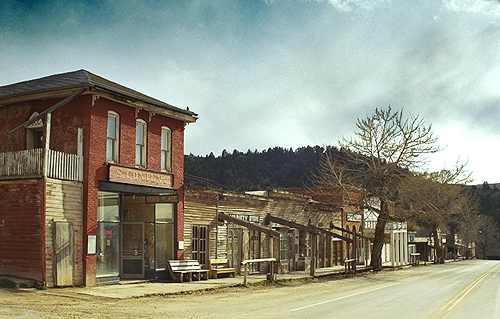
Hope for a Ghost Town

"How lonely sits the city that was full of people. She has become like a widow who was once great among the nations." This is how the first verse of Lamentations describes Jerusalem after the destruction resulting from Babylonian exile. The city that had once been the center of a great kingdom, a city that had been full of people, commerce, and life, a city that was the envy of neighboring nations was now desolate and lonely. I imagine that Jerusalem must have been something like the ghost towns that speckle the western portion of our own nation. They were towns that sprang up rapidly, often due to natural resources such as oil, gold, or silver that were found in the area. However, once those resources dried up the towns that had sprang up around them often did as well.

According to Jeremiah, Jerusalem's problem was not a drying up of natural resources but it's failure to tap into its spiritual resources. Judah had turned its back on the God who had delivered them despite the fact that He had been their most faithful resource. As a result, God used Babylon to destroy Judah and its capital city, Jerusalem. Much of the city was razed to the ground and many of the inhabitants had been taken into exile . Jerusalem had become a ghost town with little hope of recovery or chance for a future.

Into this desolate situation, God speaks the words of Jeremiah 33:14-16 through the prophet to this lonely, helpless city. God promises that Israel and Judah's days are not over. Jerusalem will not be a ghost town forever. God will raise up a king from the line of David who will reign with righteousness and justice. This king will restore Jerusalem's fortunes so that it dwells in safety and prosperity once again. In fact, God says that this king will bring such great restoration to Jerusalem that the city itself will be called the "the Lord is our righteousness"; that is, the city itself will become a symbol of God's great care and covenant faithfulness to Israel.

As we enter the season of Advent, we remember that we await the restoration of our world as well. All of creation exists as a sort of ghost town, left desolate by the sin, violence, and pain that has rendered our world less than the rightly ordered, peaceful, abundantly life-filled world that it was created to be. We too wait for the arrival of our king who will restore our world so that all of creation becomes a testament to the Lord who is our righteousness.


Wednesday, November 18, 2009

FlashForward

I’ve honestly never been much of a TV junkie but it seems that the constant attention needed by two young children has made that quiet time at the end of the day in front of the TV to be a more appealing form of entertainment in my life. Recently, Jess and I started watching this new show called “Flashforward”. In the very first episode everyone in the world blacks out at the same time for 2 minutes and 17 seconds. Of course, this causes major catastrophes; planes crash when their pilots black out, cars pile up as their drivers lose consciousness, and surgeons black out in the middle of surgeries. Obviously, much of the show is spent trying to figure why these black outs happened and if they will happen again.

But the really compelling and creative part of the story line is that during those 2 minutes and 17 seconds of unconsciousness, everyone who survives has a glimpse of the future. In fact, as the story progresses you find out that everyone had a glimpse of exactly the same few minutes 6 months in the future. Not only that but all of these “flash forwards” correspond so that if you saw someone in your flash forward it means that they saw you in their flash forward. As you can imagine, these glimpses of the future have a great impact on how all the characters in the story behave in the present. Some want to avoid the future they saw at all costs, some desperately want it to come true, others wonder if they have any freedom to change it, and some become so obsessed with what might happen that they have trouble living in the present. Despite the varied reactions to the flash fowards, the one thing no one can do is ignore them. Every decision, though not determined by it, is directly impacted by this collective vision of what is to come. This is a story where the present is being shaped less by the past than by the future.

I find this to be a remarkable metaphor for the Christian life, especially as we enter the season of Advent. We, too, have been given a glimpse of the future. In the life, death, and resurrection of Jesus Christ we have been given a vision of the kingdom of God. We have been given a glimpse of how all life will one day be lived; in complete obedience to the reign of God. Of course, this vision has not yet come true; the kingdom has not yet come in its fullness. We have only gotten a glimpse of what to expect and we are left in the present trying to figure out how to best order our lives now according to this future that we await. Some in our world will do everything they can to prevent this future reign of God from taking place. But as Christians, we long for it desperately and we order our whole lives according to this kingdom that is to come but is not yet here.

This Advent season, as we await the return of our King, consider once again what it means to have your life shaped by this hope for the future. How does the glimpse of the future kingdom given to us through Jesus Christ change the way we are to live today? How will the decisions you make today, this week, and this month be impacted by the knowledge that God’s reign is on its way?

Monday, December 15, 2008

What's in a house?

In 2 Samuel 7, King David desires to build a house for God. This desire seems reasonable enough. It even seems good and holy on David's part. After all, the passage says that God has given David rest from all of his enemies and David himself dwells in a luxurious palace. So it only seems right that David would want to honor God in some way and one of the normal things a king could do in the ancient world in order to honor a god was to build that god a temple. We often speak with similar language today, believing that the honor we show to our church buildings, which we sometimes refer to as God's house, is one reflection of how highly we honor God. Even the prophet Nathan seems to agree that this is a good idea. God has been with David in everything else he has done so why wouldn't God approve of a pious action like this one? It seems that David can do no wrong.

But then the passage tells us that on that very same night God told Nathan to say to David "Are you the one who should build Me a house to dwell in?" God reminds David through Nathan that he has dwelt in a tent ever since he miraculously delivered the people from their oppression in Egypt and never once did he ask anyone to build a house for him. Furthermore, God is the one who has built up David. Why does David now think that he can build up God? God seems almost angry with David for having even considered the idea of building a house for God. Why does something that appeared to be such a holy and pious act now appear to be almost offensive to God?

Consider what a house represents: permanence, stability, settling down. Jess and I will become home owners tomorrow morning and when we do our fate as a family will be that much more closely tied to the fate of this community. Owning a home is a very physical and financial demonstration that we intend to be here for a while and that the problems and prosperity of Clinton, IL will be our problems and prosperity. We already had a vested interest in this town but now we will in an even more immediate and intimate way.

David knows of all this when he proclaims that he is going to build a house for God. David knows that if he can build a temple for Yahweh in his capital city then this will in some way bind God's honor with the level of peace and prosperity that exists in Israel. What may appear to be a purely sacrificial act to the glory and honor of God may, in fact, be an attempt to tie God down, to bind God's fate with the fate of David's kingdom, even to legitimate David's reign. And God sees right through it. On the one hand, this passage portrays Yahweh as a radically free God who refuses to be limited by a building.

On the other hand, in this passage God practically gives back with one hand what he has taken with the other. God repudiates David for even a hint of trying to manipulate God by building a temple. But even as God says that he will not be held captive by a temple, he makes David another promise. God tells David that he will build a house for David, meaning not a physical structure but a dynasty of descendants who will rule over David's kingdom forever. God has turned the tables on David and instead of allowing David to build a house for God, God is going to build a house for David. Furthermore, God promises that his loving-kindness will never depart from David's descendants. The irony is that in many ways, this promise to David may be just as or even more binding on God than if David had built a temple for God. All in the same word to Nathan, God refuses to be limited by a building but promises to be eternally bound to a people.

Certainly, this is one of the most beautiful realities of the incarnation, of the Christmas story. It is so much more than an adorable little story about a new born in a manger. It is the reality that the almighty God of everything has chosen to be limited by human flesh, to be forever bound to the fate of his creation by becoming one of us. Our radically free God who is capable and free to do whatever he wants, who refuses even the hint of manipulation by his own anointed king, who will not and can not be limited by any power other than his own free choice, freely chooses to be forever constrained by the birth of this child 2000 years ago. The boundless God has forever bound himself to the fate of his people.

What can we say?

other than a humble

"Thanks be to God!"

Monday, December 8, 2008

The Church and Social Justice

I won't be preaching this week because we are having the children's Christmas musical in our morning service. However, if I were preaching this week the sermon text would be Isaiah 61. One of the very last papers I wrote while I was in seminary was on this passage along with its quotation in Luke 4. In this paper, I elaborate on how I believe these passages should inform the participation of the Church in causes of social justice in our world. I have decided to post that paper here in place of my usual reflections on the sermon text for the week. You can download the paper at the link below.

An Anointed, Spirit Filled Community of Righteousness

Monday, December 1, 2008

Deliver Us From Exile

The words of Isaiah 40:1-11 are a message of comfort and hope in a time of tragedy and exile. The people of Israel and Judah have been deported from their homeland by the nations of Assyria and Babylon. However, more than merely a military-political act of the nations, the prophets tell us that this exile was a theological matter, brought about by God because of the sins of his people. In Isaiah 40, we find that this time of exile is coming to an end. God seeks to comfort his people and he tells them that their punishment is over; their penalty has been paid.

As a result, a voice calls out saying "Clear the way for the Lord in the wilderness". This path is being cleared in the desert that lies between Israel's homeland and their current residence in Babylon. It will be the path of God's coming to their rescue as well as the path of exodus for the people from their captivity. V.5-8 say that "Then the glory of the Lord will be revealed" and that "all flesh is like grass...the grass withers, the flower fades, but the word of our God stands forever". In other words, the return of God's people from exile is a testament to God's glory and God's faithfulness. It shows that his promises to his people were not thwarted when Assyria and Babylon took Israel and Judah into exile. Although it appeared that these kingdoms were in control of Israel's fate, these nations actually sprout up and then fade away like grass or flowers that are here one day and gone the next. These nations, the most powerful in the region at that time, were only serving God's word which stands forever. His promises to his people far out live the lifespan of these kingdoms and nations. Therefore, Israel is now to proclaim the good news that God reigns and that he will once again guide and care for his people like a shepherd.

V.3 of this passage (combined with a verse from Malachi) is quoted in the gospel reading for this week (Mark 1:1-8), the second Sunday of Advent. The way that Mark uses this quotation at the beginning of his gospel is extremely significant. This is because Mark clearly intends for John the Baptist to be understood as the one who is preparing the way for the Lord since he goes on to talk about John preaching in the wilderness immediately after the quotation. This, in turn, is significant not so much because of what it says about John the Baptist but because of what it says about Jesus since Jesus is the one for whom John is preparing the way. Therefore, by quoting this verse from Isaiah (along with the one from Malachi), Mark has already called Jesus Lord, a titled reserved for Yahweh, the one true God of Israel, within the first few verses of his gospel. Mark has proclaimed Jesus as "the Lord" of Isaiah 40, the Lord who delivered Israel from exile, without stating it in such explicit terms. Instead, he has invited those in his audience who know the story of Israel to see Jesus in light of that story; even to see Jesus as the one who delivers Israel from its exile under Rome in his own time.

In many ways, God's people continue to live in a kind of exile today. For some Christians around the world, this exile takes on a very real, political form in that they are a small minority in their own nation and they often suffer for their faith as a result. However, even here in America, when the Church is truly being the Church, we find ourselves in a certain kind of exile. That exile certainly does not come in the political form that it does for others since we hold a considerable influence as a large constituency within our democracy. But when we refuse to be defined by the politics of our nation and instead commit ourselves to being defined by our life in Christ, we begin to realize that the values of our nation, our culture, and our political parties are not and will never be Christian values. Compared to our culture, Christ has some very strange things to say about how we should use our money, live out our sexuality, and spend our time. So in this way, even the Church in America finds itself in exile. Like Israel, we are in need of deliverance from a land that is not our true home.

Therefore, we can take the words of Isaiah 40 to heart. Although they were written as words of comfort to a people in exile about 2500 years ago, they speak words of hope to our current exile as well. The same God whose word did not fail then is still faithful to deliver us today as well. So we continue to look forward to his coming kingdom and the deliverance of all of creation from its exile in sin.

Monday, November 24, 2008

Thy Kingdom Come?

"Oh, that you would rend the heavens and come down." Isaiah 64 begins as an earnest plea for God to show up and do something. It is a call for God to exercise his mighty power as he had done in the past. The next several verses continue on with similar language asking God to come down and make his name known to his adversaries. Isaiah assures us that God acts on behalf of the righteous, the ones who remember the ways of God. Up to this point, you can almost hear Isaiah's audience cheering Isaiah on. Perhaps they even shout out "Amen" a few times or whatever the ancient Israelite equivalent of that would be. Certainly, God's people would get excited as the prophet Isaiah begins to talk about God doing mighty things on their behalf once again just as he did at the Exodus.

But then this passage takes a sharp turn. In the second half of verse 5, we hear about God being angry because Israel has sinned. There is even doubt expressed as to whether or not Israel will be saved. Isaiah says that they have become unclean; so unclean in fact that even the deeds they consider to be righteous are like mentrual rags. The people wither like a leaf and are blown away by the wind.

The crowd that was just cheering Isaiah on has received a punch to the gut. The wind has been knocked out of their sails. Just moments earlier they had been excited and adament about God showing up in their presence so that God's righteousness might vindicate them. But now they have realized what's God's righteous presence will mean for them as well. They themselves are not without sin. Therefore, if God comes to them as they have asked, it will mean that their sin will have to be dealt with as well.

However, this fact does not cause Isaiah to rescind his appeal to God. He continues to earnestly seek God's coming but he does so with the recognition that it will involve judgment for he and his fellow Israelites as well. Therefore, Isaiah calls upon God as a father and asks him to deal with Israel's sin but to do it mercifully and not with anger beyond measure. He describes God as the one who shapes the clay which is Israel; meaning that God has the right to do whatever he pleases with Israel but also that this God would no more discard this sinful and flawed people than an artist would discard a work of art into which she has poured much time and energy. God will deal with Israel's sin but Isaiah believes that he will do it in a way that will not destroy but salvage the damaged vessel.

There could hardly be a more appropriate message for the Church as we begin the season of Advent. In this season, we remember Israel's long and expectant waiting for a messiah while also looking forward to the final establishment of Christ's kingdom upon his return to earth. We will talk much over the coming weeks about how we long for God's kingdom to come so that all the wrongs of our world might be righted. But even as we hope for that kingdom, we must be reminded that the Church will not be excluded from the light of God's presence which will expose all sin and unrighteousness. When that day comes, we too will find that many of the actions that we regarded as our most righteous and pious acts are actually more like filthy rags in God's sight and that we may well have neglected the weightier matters of God's law. Therefore, we must continually look back to that man, Jesus Christ, in which God did rend the heavens and come down among us and take on our flesh. The same Spirit which lived in him must also rend our world and dwell among us so that we might become more and more like him now as we anxiously await the arrival of his kingdom.