Furthermore, it seems that a very strong opinion is a prerequisite to making your voice heard in either faith or politics. If you appear to be undecided on any issue in any either realm, then this indecisiveness is often seen as a weakness. If this is true, then I must certainly be accounted among the weak. There are almost no political opinions or party affiliations that I hold onto too dearly and while I hold my faith convictions very strongly, even in these I at least aim to be as gracious as possible in hearing the faith convictions of others, though I often fail to be Christ-like even in this simple task.
Additionally, everyone knows that faith and politics are two combustible topics of conversation that shouldn't be discussed in polite company, much less mixed together. The result of talking about both is that I will almost certainly offend someone, especially since I will speak here in very broad generalizations so as to make a point. What is worse, there are so many people who have written or spoken about the relationship between faith and politics, that I probably can't even say anything that hasn't already been said. So not only will I likely offend many who read this but I will probably do so without even having said anything that was all that provocative; truly the worst of both worlds when it comes to writing and sharing ideas.
Nonetheless, this is a post I have been desiring to write for quite some time. It is one that has been sitting in the back of my brain for at least a month. So despite my lack of qualifications to say anything about politics or even the relationship between faith and politics, I intend to do just that. I do this not so much because I imagine that I will suddenly solve this problem with which I have been wrestling for years now but mostly just so that I can get this stuff out of my head and into writing and invite others into the conversation in the process. So as you read this, I ask that you read it as just that: an invitation to a fair and honest conversation. Please don't see it as any kind of authoritative words from a pastor and certainly not as words from a McCain or Obama supporter. It is largely nothing more than my own personal struggle with what it means to be a Christian in a democracy like ours and I invite others to see if my struggle rings true with their own.
As I survey the political landscape, there is one thing that seems to be obvious to everyone: Democrats and Republicans are on the opposite end of the spectrum concerning pretty much every issue that matters to Americans today. The way in which Democrats and Republicans understand the relationship between faith and politics does not seem to be an exception to this rule. Each party seems to not only disagree about the issues but also about how one's faith should impact how they respond politically to those issues.

If I can speak very generally, even stereotypically, it seems to me that most conservatives see the relationship between faith and politics as a direct line or even an equals sign. That is to say, the conservative approach seems to be a direct correlation between one's faith values and how one votes on certain issues without any kind of intermediary step. For a example, a typical conservative stance in my opinion would be "Abortion is wrong, therefore abortion should be illegal." In this way of thinking, one seeks to make their personal convictions into law by sheer majority force.
As I see it, the downfall of this kind of thinking is that it completely fails to imagine what things would be like if those who shared such convictions were suddenly in the minority. In other words, what would Christians do if the majority of our nation were suddenly Muslim and that Muslim majority then sought to impose its will on the Christianity minority by requiring prayers to Allah in schools? Wouldn't we decry this as a violation of the constitution and all the principles that make our country great? My point here is simply this: while a direct equation between one's values and the law has an attractive simplicity about it, I don't think it is really a viable way of seeing the relationship between the Christian faith and American politics. On the one hand, it seems to me to be un-American in the sense that it does not take seriously the constitutional principles that we would want honored if we were in the minority. However, much more important than that, I do not believe it is a very Christ-like stance to impose our political will on a nation simply because we are in the majority. Rather than asking "How can I get more people to agree with my values so that I can make those values law and thereby enforce those values on those who don't themsleves share my values?" it seems to me that it would be much more Christ-like to ask "What is best for everyone, even those who don't share my values?"
Again, if I can paint with very broad, basically stereotypical, brush strokes, it seems like most liberals check their faith at the political door entirely. While conservatives seem to have too direct of an equation between faith and politics, many liberals seem to want to chop off one side of that equation entirely, not allowing faith to have a voice in the public arena at all. As a result, many liberals appear to be completely faithless. The ones who do have faith don't seem to want to ta

lk about it. And the liberal who does openly speaks about his or her faith seems to want to constantly remind everyone that faith is a personal matter that has no place in a public discussion like politics (this liberal then receives odd looks and glances from other liberals who wonder why this person even brought up the issue of faith in the first place, as if something like that matters in politics).
In my opinion, this view of the relationship between faith and politics is equally deficient though, of course, in ways entirely different from the typical conservative stance. The strength of this view is that it at least acknowledges that everyone does not share my faith values and I should not force them to simply because there are more people in this country who share my faith than those who don't. However, the typical liberal role of faith in the realm of politics fails miserably from a Christian perspective when it relegates the role of faith to a purely personal and individual matter with no political consequences. This apolitical characterization simply can not be true of the faith movement that originated with Jesus when Jesus went around saying that the kingdom of God (thoroughly political language) was near which in turn got him crucified (the death reserved for political revolutionaries). The earliest Christians knew the political character of the gospel to which they had given their lives as well when they refused to offer sacrifices to images of the emperor and acknowledge him as Lord (again, a political term) because there was another, namely Christ, whom they knew to be the true Lord and savior of the world. A thorough read of the New Testament reveals that it abounds with political language to the extent that they can not all be cited here. Therefore, to say that the Christian faith is a private, apolitical matter simply will not do.
Let me take a step back at this point to make a statement specifically about the two candidates who are currently vying for our vote this fall. Both Sen. John McCain and Sen. Barack Obama have spoken openly about their faith as Christians throughout the election proc

ess. I think that it is important for me to say at this point that I believe both of these men when they make that claim. Although McCain and Obama obviously see the political consequences of their faith in ways that are quite distinct from each other and both are distinct from how I would understand the political consequences of my faith, I still think that both candidates are men of integrity who are seeking to be Christian in a way that they understand to be congruent with the political office that they seek despite how fundamentally different each of their understandings of the relationship between their faith and the presidency seem to be.
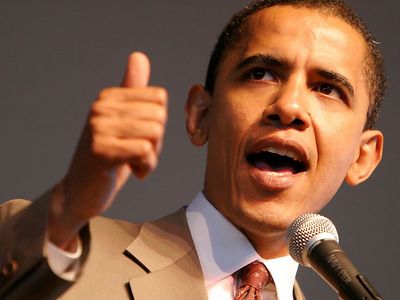
I have a considerable amount of respect for Sen. Obama precisely because he seems to have given more thought to the relationship between faith and politics than most other politicians. Obama has broken the liberal mold to some extent by speaking openly about his faith
and saying that faith values have a substantial role to play in politics. Now this is not to say or even suggest that I agree with all of Obama's policies or that he is the only acceptable candidate for which a Christian should vote or anything along those ridiculous lines. There are some ways in which I think Obama could be more Christian and less Democrat just as I think there are some ways that McCain could be more Christian and less Republican. Nonetheless, I appreciate the simple fact that Obama seems to have spent

some serious time and energy thinking about the relationship between faith and politics.
However, having said all that, I often find myself thinking that even Obama's nuanced articulation of the relationship between faith and politics is insufficient. Obama often talks about the need to "translate" our faith values into values and arguments for the common good that will make sense even to the person who does not share our faith. This approach has some susbtantial advantages over the two extremes I articulated earilier. On the one hand, it takes seriously the constitutional rights of others as well as our Christian responsibility to be gracious toward others who disagree with us thus righting the sterotypical conservative shortcoming. On the other hand, it does not exclude faith from the political discussion as a purely individual and personal conviction thus righting the stereotypical liberal shortcoming. Despite this substantial improvement on the two extremes, I still wonder if this is a truly Christian position for the relationship between faith and politics. I find myself wondering "If I have to "translate" my Christian values into secular ones, then isn't that just another way of eliminating faith from the public discourse? If I can't make a purely secular argument for a conviction I hold because of the way my faith causes me to see the world, does that mean I shouldn't bother entering the conversation at all?" Of course, I do not think that it is Obama's intent to eliminate faith from the public discourse. I believe that he intends just the opposite; to allow faith back into the liberal side of the conversation. Nevertheless, it seems to me that Obama's idea of "translation" still does not allow for a genuine dialogue between faith and politics. It seems that even in Obama's genuine attempt to take a legitimate step forward in the dialogue between faith and politics, the faith is still getting trumped by the politics.
So then, where does that leave us? As Christians, how can we be certain that our faith is not relegated to the sidelines of public discourse as an apolitical, purely "spiritual" and individual matter while also showing a Christ-like love and genuine respect to those who do not share our faith? Perhaps, like a bad science experiment, the way that I have posed the question has already revealed my biases. The answer is obviously not in being Democrat or Republican since both parties fail to be Christian in one way or another. However, to just give up on politics entirely because of the failures of both parties would not be a proper Christian response in my opinion either. After all, God expects us to exercise the power and freedom that he has granted us, even through political means, in a responsibly Christ-like way. However, I think the key here is that we not use those powers and freedoms to try to create God's kingdom here on earth since we can never do that anyway. Instead, it is our role to use those powers and freedoms to witness to the kingdom that will one day be a reality.
The ironic thing about being a witness, at least in the way that word is used in Scripture, is that it combines elements of bold proclamation with elements of weakness and vulnerability. The Christian witness does not abandon the grammar of his or her faith in the public square even when it fails to translate into secular values but neither does the witness impose his or her faith on others. Or to put it more concretely; the vote that a Christian casts in a given election or concerning a specific issue, while a necessary part of Christian stewardship and witness, will probably not be the most important political act for any Christian. This is because the end result of the voting process is not ultimately the Christian's concern which is in turn true because the Christian knows that it is ultimately God's kingdom and not the American political system which will set things right in our world. Again, this is not some kind of predeterminism that says it doesn't matter what we do because God has already determined everything anyway and it is not some kind of escapism that says that this world doesn't really matter so why bother anyway. It is just the tension in which we constantly live as Christians, as people who believe that we have been entrusted with the care of this world while also recognizing that we can not right all of its wrongs since only God can do that in the establishment of his kingdom.
Of course, in so many ways, this kind of stance toward politics is still painfully incomplete (but to be fair, I warned you at the beginning of this that I shouldn't be writing about politics in the first place). There are so many questions that it leaves unanswered. It says nothing about which candidate a Christian should vote for or how a Christian should vote on certain issues. But in some ways, I guess that's partially the point. In order to be something that is worthy of my ultimate allegiance, the kingdom of God has got to be something that transcends our petty partisan squabbling. It has got to be something that relativizes any other commitments or allegiances that I have in this world. It relativizes those allegiances to such an extent that I begin to wonder if, from a Christian perspective, the many conversations that I have had and will have about politics over the course of my life might be a more substantial political act within the kingdom of God than my vote in the American political system ever will be. Perhaps the Church's public proclamation of the values of the kingdom is actually more politically significant than whether or not those values are ever codified into American law. Maybe the only proper approach to the American political system for a Christian is that of critically distanced participation; seeking to witness to God's kingdom through the political process while recognizing that God's kingdom alone is our ultimate political hope.


 But then that little bit of excitement also reminds me of George Bush's election to office. It reminds me of how impressed I was with his message of "compassionate conservatism". It reminds me of all the patriotism that I felt and that arose throughout our nation after the attacks on September 11, 2001. It reminds me of how high President Bush's approval rating was, much as Obama's is now.
 frican-American becoming president (as profound as that is). What if the Church in America looked to Dr. King as a modern American example of what it means to seek justice with humility, to seek peace and reconciliation through self-sacrifice, to embody Jesus' way of life in our own context? That would truly be a dream fulfilled.
 frican-American becoming president (as profound as that is). What if the Church in America looked to Dr. King as a modern American example of what it means to seek justice with humility, to seek peace and reconciliation through self-sacrifice, to embody Jesus' way of life in our own context? That would truly be a dream fulfilled.