Wednesday, December 16, 2009

Sentimental Does Not Equal Sacred

Sometimes I wonder if sentimentality contributes to a misunderstanding of the gospel more than just about anything else. We turn this cross-bearing way of life into an idyllic portrait of Jesus laughing and playing with little children and somehow the hope of all creation becomes nothing more than a Precious Moments figurine or a Thomas Kincaid painting or whatever other way we can find to turn the revolutionary message of Jesus into something that will stir our emotions and makes us feel more religious or good or spiritual for the moment.

Nowhere is this way of thinking more evident than during the Christmas season. We have these idealized versions of the birth of Jesus running through our heads (if we are even thinking about Jesus rather than the shopping we need to get done) where Joseph and Mary find a place to stay (after being turned away by the heartless innkeeper) just in time for her to give the world's cleanest and least painful birth to a child who "no crying he makes". Meanwhile, "the cattle are lowing", "the ox and the lamb kept time" while a little boy plays his drum, and "the ox and ass before him bow" (this must be a pretty gifted ox, bowing and tapping its foot in rhythm at the same time). Soon after the shepherds and wise men show up and the star which the wise men followed kindly serves as a spotlight on Jesus for a climactic end to the whole production. It's a little surprising we haven't found a way to get Santa himself into the story somehow. Perhaps his reindeer were pulling a sleigh filled with the wise men's gifts.

It's not surprising then that we try to make our own Christmas celebrations correspond in perfection to the idealized perfection we imagine encompassed that first Christmas. The tree, the gifts, the Christmas cards, the pictures, the dinner, must also be just as perfect as the perfect baby in the perfect manger or we'll have missed out on something. If the whole day doesn't culminate in some cataclysmic level of joy and absolute bliss, then it becomes a disappointment rather than a celebration.

But this all bears very little resemblance to the way Luke actually tells the story of Jesus' birth...or any birth story that has ever been told for that matter. Have we forgotten that this is an actual birth story of a real human baby?
The births
of my two children are two of the bloodiest, messiest, and most awkward experiences of my entire life and I wasn't even the one doing the birthing. If Jesus was indeed fully human as orthodox Christian faith claims, then why would we imagine that his birth would be any different? In fact, it seems that contrasting Jesus' kingly nature with the ordinary and even lowly nature of his birth is precisely part of the point that Luke is making in the way that he tells the story.

Luke begins the story of Jesus' birth by giving us some context. He tells us that it was in the days when Caesar Augustus had ordered a census to be taken of the whole Roman Empire. This was the first census taken while Quirinius was governor of Syria and everyone had to return to their hometown to be registered. So Joseph went with Mary to his hometown of Bethlehem. In telling us these things, Luke is giving us some historical background and setting the scene like the professional story teller that he is but he is also doing much more than that. When I talk about the birth of my son, I usually don't bother to mention that he was born during the Obama administration when Pat Quinn was governor of Illinois. That's because those details seem completely irrelevant to something as personal as the birth of my own child. For Luke, however, it is relevant to place the birth of Jesus in the context of the world powers of his day. This is because Luke wants us to see right away that this is not the birth of just another Jewish boy. It is not merely a personal, family event but one that has significance for the whole world. In fact, when many in the Roman Empire spoke about Caesar Augustus, they used words like savior and Lord. Augustus was known as the one who had brought peace to the empire. So when the angels proclaim to the shepherds that a savior had been born in the city of David who was Christ the Lord and they proclaimed peace on earth, this is no mere coincidence. Luke is saying in story form what all the early Christians believed; that even though Caesar was widely known as Lord and savior of the whole world, it was really only Jesus, a descendant of the great King David, who was the true Lord, savior, and prince of peace.

Of course, we might expect that if Jesus were the next world ruler then his birth would be announced in the capital city of Rome or at least at the Temple in Jerusalem and there would be trumpets and streamers and royal feasts with all of the most important people in attendance. Instead, he is born in a tiny village in the part of the house where animals slept. (This image of Mary being turned away by a heartless innkeeper even while she is having birth pangs in the middle of the night is reading a lot into the story that isn't there. Luke simply says "While they were there, the days were completed for her to give birth" so they could have already been in Bethlehem for a while when it was time. Furthermore, the word often translated as "inn", the place where there was no room, is probably better translated as family room or guest room (as it is in Luke 22:11). Most ancient houses had an attached but somewhat separate room where the animals slept which is probably where Mary and Joseph were. It is likely that there simply wasn't enough room for the birthing process in the main room of the house with many other relatives staying there for the census.) Additionally, Jesus' birth is not announced to VIPs and heads of state. It is announced to lowly, unimportant shepherds in the fields nearby.

The one true king, lord, savior, and prince of peace is born among smelly animals, laid in the box where those animals ate, and worshiped by unnamed, lowly shepherds. This is our gospel, our good news; that the king of all did not cling to his kingly status and use it against us but humbled himself to our lowly position so that we might be a part of his kingdom. We only cheapen this magnificent reality when we turn it into a sentimental, feel good, greeting card kind of idea that we celebrate once a year by gorging ourselves on shopping and food. God calls us to humble ourselves as well; to lower ourselves to the position of those in need, to learn what it is like to live in their flesh because that is what God did for us...and not just in December, but everyday, as a way of life. Only then do we truly honor Jesus as Lord.

Wednesday, December 9, 2009

A New David

According to the opening verse of the book of Micah, the word of the Lord came to Micah "in the days Jotham, Ahaz, and Hezekiah, kings of Judah." This means that Micah was prophesying in the southern kingdom of Judah around the same time that the northern kingdom of Israel was being destroyed and exiled by Assyria. This brought the armies of superpower Assyria right to Judah's doorstep. In fact, Assyria did conquer many parts of Judah and Hezekiah was forced to pay tribute of gold and silver to prevent further destruction. Even then, Sennacherib, king of Assyria threatened to take all of Judah, especially the capital city of Jerusalem, by force. It was only because Hezekiah sought the Lord in prayer that Sennacherib was turned back and Jerusalem was spared.

Clearly, these were dark days for Judah, barely scrapping out an existence under the menacing shadow of Assyria's mighty power. Judah's spiritual health as God's people wasn't in any better shape either. The prophecies of Micah reflect this gloomy reality. The opening verses of Micah, which describe the mighty power of God as he comes to punish Judah for its harlotry, set the tone for the book as a whole.

While Micah certainly would not be mistaken for the most cheerful piece of literature ever written, it is not without its moments of hope and inspiration. One of those is the sermon text for the final week of Advent, Micah 5:2-5. There we are told that a ruler will rise up from Bethlehem, despite its small size, to shepherd the people of Israel. Bethlehem would be nothing but a small, completely insignificant place unworthy of mention by the prophet Micah, were not for one very important person who was born there. Bethlehem was the home of King David, the model king of Israel. Therefore, to say that a leader would arise from Bethlehem was to say that another David was on his way.

So often, this is the hope of the Old Testament. Repeatedly, the prophets find different ways to say basically this same thing: one day we will have a king like David again and he will be the savior of Israel, the one whose reign is the reign of God. Its no wonder then that the earliest Christians, who were mostly Jews and had their whole lives shaped by this hope, easily saw the promise fulfilled in Jesus. Matthew makes the connection to these verses from Micah explicit in his gospel by having the religious scholars quote them to the Magi who are seeking the new born king. It is this king and his kingdom whose beginning we celebrate at Christmas but the final fulfillment of which we still await.

Wednesday, December 2, 2009

Santa or Smelter?

We spend the season of Advent looking forward to the full establishment of Jesus' kingdom when he returns in glory. But what do you imagine that the coming of that kingdom will be like? Its so easy - especially this time of year - to think that Jesus is something like Santa; that upon his arrival everything we've ever hoped for will magically appear. Its easy to think that the kingdom of God will simply be the affirmation of all of our highest hopes and dreams for what the world should be. It comes naturally to us to think that we've got it all right, all figured out and that when Jesus shows up we will be vindicated and everyone will see how right we were. It seems to be human nature to assume that the arrival of God will require no change on our part; only on the part of others.

In other words, we are often all too eager to ask the question that the people of Israel ask in Malachi 2:17. "Where is the God of justice?" That is, "Why doesn't God show up and punish the wicked and reward the righteous?" Of course, in asking that we typically count ourselves among the righteous and therefore expect that there will be only reward for us.

In Malachi 3:1-4, God is indeed on his way. However, the messenger of the Lord reminds the people that he is not coming simply to dispense to them all of their wishes and desires. He comes as a refiner's fire and as a fuller's soap. It is Israel, God's own people, who are in need of cleansing and purification.

As the Church, we surely do look forward with great expectation to the coming of Jesus and his kingdom. We believe that it will bring the kind of peace, justice, and fullness of life for which we all long. But if we think that the coming of this kingdom will simply mean reward for us without refinement, then we have not understood Jesus' call to repentance. We too must be thrust into the flames and melted down so that all that contaminates our love for God and one another might be removed.

Lord, hold me in the fire, melt me, wash me, do whatever you have to do to to purify me until I am rid of everything that keeps me from being the beautiful and valuable creation you have made me to be.

Monday, November 23, 2009

Hope for a Ghost Town

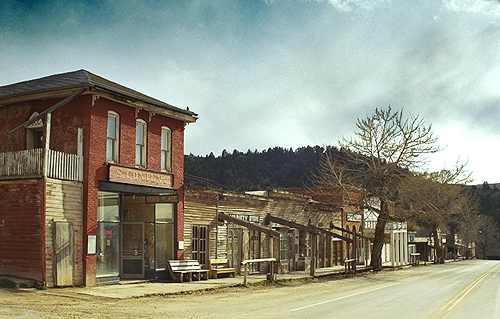
"How lonely sits the city that was full of people. She has become like a widow who was once great among the nations." This is how the first verse of Lamentations describes Jerusalem after the destruction resulting from Babylonian exile. The city that had once been the center of a great kingdom, a city that had been full of people, commerce, and life, a city that was the envy of neighboring nations was now desolate and lonely. I imagine that Jerusalem must have been something like the ghost towns that speckle the western portion of our own nation. They were towns that sprang up rapidly, often due to natural resources such as oil, gold, or silver that were found in the area. However, once those resources dried up the towns that had sprang up around them often did as well.

According to Jeremiah, Jerusalem's problem was not a drying up of natural resources but it's failure to tap into its spiritual resources. Judah had turned its back on the God who had delivered them despite the fact that He had been their most faithful resource. As a result, God used Babylon to destroy Judah and its capital city, Jerusalem. Much of the city was razed to the ground and many of the inhabitants had been taken into exile . Jerusalem had become a ghost town with little hope of recovery or chance for a future.

Into this desolate situation, God speaks the words of Jeremiah 33:14-16 through the prophet to this lonely, helpless city. God promises that Israel and Judah's days are not over. Jerusalem will not be a ghost town forever. God will raise up a king from the line of David who will reign with righteousness and justice. This king will restore Jerusalem's fortunes so that it dwells in safety and prosperity once again. In fact, God says that this king will bring such great restoration to Jerusalem that the city itself will be called the "the Lord is our righteousness"; that is, the city itself will become a symbol of God's great care and covenant faithfulness to Israel.

As we enter the season of Advent, we remember that we await the restoration of our world as well. All of creation exists as a sort of ghost town, left desolate by the sin, violence, and pain that has rendered our world less than the rightly ordered, peaceful, abundantly life-filled world that it was created to be. We too wait for the arrival of our king who will restore our world so that all of creation becomes a testament to the Lord who is our righteousness.


Wednesday, November 18, 2009

FlashForward

I’ve honestly never been much of a TV junkie but it seems that the constant attention needed by two young children has made that quiet time at the end of the day in front of the TV to be a more appealing form of entertainment in my life. Recently, Jess and I started watching this new show called “Flashforward”. In the very first episode everyone in the world blacks out at the same time for 2 minutes and 17 seconds. Of course, this causes major catastrophes; planes crash when their pilots black out, cars pile up as their drivers lose consciousness, and surgeons black out in the middle of surgeries. Obviously, much of the show is spent trying to figure why these black outs happened and if they will happen again.

But the really compelling and creative part of the story line is that during those 2 minutes and 17 seconds of unconsciousness, everyone who survives has a glimpse of the future. In fact, as the story progresses you find out that everyone had a glimpse of exactly the same few minutes 6 months in the future. Not only that but all of these “flash forwards” correspond so that if you saw someone in your flash forward it means that they saw you in their flash forward. As you can imagine, these glimpses of the future have a great impact on how all the characters in the story behave in the present. Some want to avoid the future they saw at all costs, some desperately want it to come true, others wonder if they have any freedom to change it, and some become so obsessed with what might happen that they have trouble living in the present. Despite the varied reactions to the flash fowards, the one thing no one can do is ignore them. Every decision, though not determined by it, is directly impacted by this collective vision of what is to come. This is a story where the present is being shaped less by the past than by the future.

I find this to be a remarkable metaphor for the Christian life, especially as we enter the season of Advent. We, too, have been given a glimpse of the future. In the life, death, and resurrection of Jesus Christ we have been given a vision of the kingdom of God. We have been given a glimpse of how all life will one day be lived; in complete obedience to the reign of God. Of course, this vision has not yet come true; the kingdom has not yet come in its fullness. We have only gotten a glimpse of what to expect and we are left in the present trying to figure out how to best order our lives now according to this future that we await. Some in our world will do everything they can to prevent this future reign of God from taking place. But as Christians, we long for it desperately and we order our whole lives according to this kingdom that is to come but is not yet here.

This Advent season, as we await the return of our King, consider once again what it means to have your life shaped by this hope for the future. How does the glimpse of the future kingdom given to us through Jesus Christ change the way we are to live today? How will the decisions you make today, this week, and this month be impacted by the knowledge that God’s reign is on its way?

Monday, November 16, 2009

The Ideal King

I'm looking at a passage of Scripture this week that I've never given any serious thought to before. Now that I'm confronted with it, I'm realizing what a rare occasion this is for me. Obviously every time I come to my sermon text each week, I know I have a lot to learn about that passage. But it is very rare, if not a completely new experience, to find myself preaching from a passage that I haven't already done some study on or heard something about. I'm sure I've read 2 Samuel 23:1-7 many times before. I've read the Bible cover to cover a couple of times and I read 1 and 2 Samuel through as a whole once or twice back at the beginning of the summer when I knew I would be preaching from both books for a few months. In spite of that, I feel like I've never read 2 Samuel 23 before today.

As a side note, this is probably one of the reasons I'm sort of a Bible nerd; there is just so much there. I think I know the Bible pretty well and yet it is just such a vast and varied collection of literature that you could spend your whole life studying it without exhausting all that God has to offer through it. This is also just one of the reasons that I preach from the lectionary. By following a series of prescribed readings of four passages of Scripture for each Sunday over a three year cycle, I am lead to passages that I would not otherwise preach. This helps our congregation's life together to be shaped by the whole of Scripture, not just my own favorite texts.

Well anyway, on to the actual passage. I'm not sure yet how all of this will coalesce into a sermon but for now this is what I am noticing about 2 Samuel 23:1-7.

My Bible titles this section "David's last song". As such, it appears to be a summary of what David hoped that his reign as king was or what he hopes that the reign of future kings will be. It's almost like David's farewell speech or a final will and testament: his last chance as king to influence the course of Israel's history with a few final words. Perhaps, in this way it is similar to the book of Deuteronomy which is a sort of farewell speech from Moses as the Israelites are poised to enter the promised land but Moses knows he will not accompany this new generation in that joyous journey. So he does all that he can to set them on the right path since he can no longer lead them; he reminds them of what God has done and how they should continue to be faithful to God as a result.

Similarly, David holds up a vision of what Israel's king should be even after he is gone. He gives this vision of the king's role authority by saying that the Spirit of the Lord has spoken through him. At the center of this kingly ideal is righteousness; that is, the king must be one who rules justly and fairly out of reverence for God. David says the king who does this will bring life to his kingdom in the same way that sunlight brings life to the grass after the rain.

Then David says in v. 5 "Truly is not my house so with God?". This seems to be an odd question since David and the writer(s) of 1 and 2 Samuel know that David's house has not been this way with God. There were times when David had abused his power as king rather than reigning righteously and David was still reaping the consequences of that action through the misconduct of his children. David himself did not live up to the ideal portrait of kingly rule which he paints in this song.

But the very next line of the song puts a different spin on things. "For He (God) has made an everlasting covenant with me (David), ordered in all things and secured; for all my salvation and all my desire, will He not indeed make it grow?" David's house being right with God doesn't seem to depend so much on what David has done as it does on what God has done. David's house is not "so with God" because David was perfect but because God has chosen David and his descendants. It is God's sovereign choice and not a mere accident of human history which has made David and his descendants to be the kings of Israel. Because of that, David holds out hope that despite his own household's imperfections, his descendants will still be "as the light of morning" to the kingdom of Israel. On the other hand, "the worthless" (a term used earlier in 2 Samuel to describe Sheba, a man who rebelled against David's reign as king) are thorns that have to be handled carefully but will be thrown out and burned up.

In short, this song is a reaffirmation of the kingly ideology that is prevalent throughout the story of David. It expresses the deeply held belief that David was not just a king but a righteous ruler put in place by a righteous God who would be faithful to Israel by keeping a descendant of King David on the throne forever and seeing to it that any who rebelled ("the worthless") against God's anointed king would be defeated.

Undoubtedly, the lectionary editors have chosen this passage for this final Sunday before Advent because it is Christ the King Sunday. Just as this passage expresses the ancient Israelite hope of what Israel's king would be, so it expresses our hope as followers of Jesus that he is God's true anointed, that he speaks for God, and that one day he will indeed reign in righteousness and that all the worthless powers that have threatened his reign as king will ultimately be defeated.

Friday, November 6, 2009

The Gift of a Future

Hannah's husband, Elkanah, was a man with a proud past. At least, that's the feeling I get from the beginning of 1 Samuel. Why would you mention four generations worth of ancestors unless some kind of pride was attached to that ancestry? Despite marrying into this proud past, however, there seems to be little hope for Hannah's future. In a world where women are valued by the children they provide, Hannah is barren. To be sure, Elkanah loves her deeply in spite of her barrenness but the story seems to indicate that even Elkanah's love is not enough to overcome Hannah's hopeless situation. (When Elkanah asks his wife "Am I not better to you than ten sons?", Hannah gives no answer and continues to pray for the Lord to remember her and give her a son.) To make matters worse, Elkanah's other wife, Peninnah, provoked and tormented Hannah over her lack of children.

Hannah's story is a microcosm of the story of Israel, particularly the place where Israel finds itself in Hannah's lifetime. Israel too has a proud past. They still remember the days that God delivered them with a mighty hand from slavery in Egypt. Israel has seen God do tremendous things in the past. But Israel's situation is now bleak and there is little hope for the future. The reactions of Eli the priest to Hannah's prayer is telling of the situation in Israel. When Hannah comes to the tabernacle to pray, Eli sees her lips moving but doesn't hear her speaking and assumes that she must be drunk. Was prayer in Israel so rarely seen that even a priest had to assume someone who was praying had just had too much to drink? Furthermore, Eli's sons offer no hope of better spiritual leadership in the future. And just as Hannah was mocked by Peninnah, so Israel was mocked by its rivals and their greater power, especially the Philistines.

Into this bleak narrative with no future and no hope, God breathes new life through the birth of a son. Samuel is the answer both to Hannah's prayer and to Israel's problem. Samuel is not only the overcoming of Hannah's barrenness. He is also the future leader of Israel; the one through whom Israel will have a hope and a future once again. Hannah and Israel both had a proud past and heritage but as great as that heritage was, it was not enough to make for either of them a future. Only God, by his gift to Hannah, could do that.

Our local congregation has a proud heritage dating all the way back to the 1920's, a long time for a Church of the Nazarene. Just a year ago our denomination celebrated its proud heritage of 100 years of holiness mission. And the Church around the world has seen God do many tremendous things over the last 2000 years. But no matter how proud we might be of our past, God's grace is still our only way into the future.